
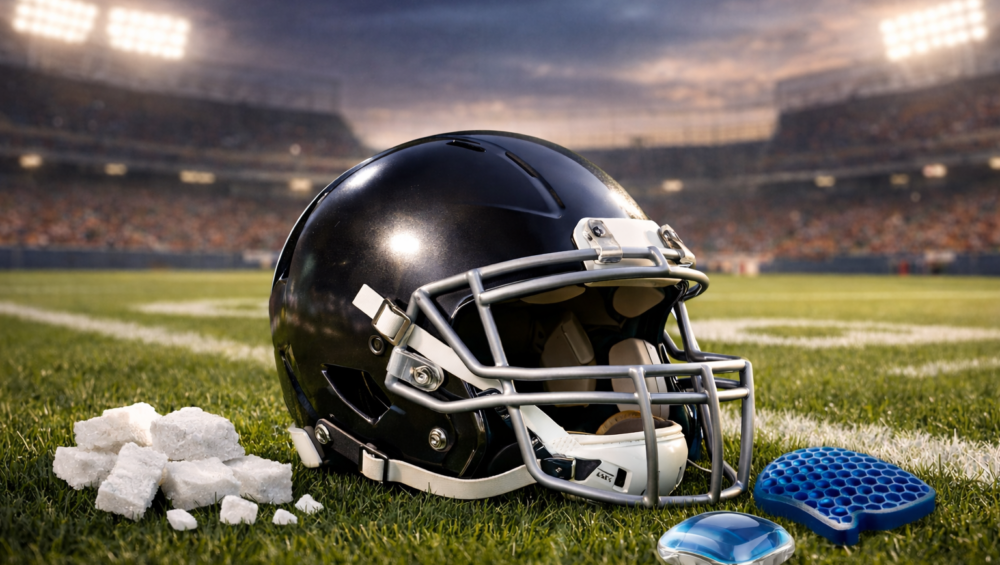
Have you ever wondered what keeps a football player’s head safe during a hard hit? Many people see the helmet but do not realize that the material used in football helmets is responsible for players’ safety. It is not just hard plastic. Instead, it is made from many strong and smart materials.
Football is a fast and physical game. Players run, jump, and crash into each other. Because of this, head protection is very important. Over the years, helmet design has improved a lot. New materials are now lighter and stronger. Let’s explore more about the materials used in football helmets.
History of Football Helmets
| Time Period | Main Material Used | New Technology Added | Safety Improvement |
| 1920s – 1940s | Soft Leather Helmets | Basic padded head straps inside | Very little protection, and it prevented small cuts |
| 1950s – 1970s | Hard Plastic Shells (ABS) | Suspension systems and face masks | Greatly reduced skull fractures |
| 2000s – 2020s | Advanced Composite Materials and TPU | TPU padding and 3D lattice designs | Higher protection and better shock control |
Also Read: How to Break in Football Cleats
Components of a Modern Football Helmet
Outer Shell
Polycarbonate Shell
Most football helmets use polycarbonate plastic. This material is very strong but still light. It spreads the force of hits over a wide area. Polycarbonate also resists cracking. It works well in hot or cold weather. It can be shaped to fit the head comfortably.
Advanced Composites
Some modern helmets use advanced composite materials. These are mixtures of plastics and fibers. They help reduce weight without losing protection. Advanced composites also absorb impact better. Because of this, the head is safer from strong hits. Players feel less neck strain because the helmet is lighter.
Inner Materials
Expanded Polystyrene (EPS) Foam
EPS foam is inside the helmet under the shell. It is light but strong. When a player is hit, EPS compresses. This absorbs energy from the hit and reduces force reaching the brain. EPS foam is also inexpensive and easy to replace, making it practical for schools and leagues that need cost-effective safety solutions.
Vinyl Nitrile Foam Padding
Vinyl nitrile foam is softer than EPS. It adds comfort and extra shock absorption. It is flexible and returns to its shape after pressure. This material helps the helmet fit snugly on the head. This foam also reduces fatigue, because players feel less pressure on the top and sides of their heads.
TPU Cushioning (Thermoplastic Polyurethane)
TPU is used in modern helmets as small soft pods or columns. It is strong but flexible. TPU absorbs energy from hits and spreads it across the head. It works well in hot and cold weather. TPU cushions are lightweight, providing improved protection without making the helmet heavy.
Air Bladder Systems
Air bladders are small pockets filled with air inside helmets. Players can adjust the air to make the helmet fit better. The air pockets also help absorb shocks. When a hit happens, the air spreads the force. This reduces pressure on one spot and allows players to fine-tune the helmet before each game.
Read more: Leepa Paddles
Face Mask (Steel or Titanium)
The face mask protects the face from hits. Most face masks are made from steel. Steel is strong and durable. It can handle heavy impacts. However, steel is heavier than some other metals. Some high-level helmets use titanium face masks. Titanium is lighter than steel but still very strong. As a result, players can move faster.
Chin Strap Materials
The chin strap keeps the helmet in place. It is usually made from strong nylon straps. The cup part may be made of plastic and foam. Soft padding on the chin cup adds comfort. Strong buckles keep everything locked. Therefore, the chin strap material plays a key role in keeping the helmet stable.
Inner Liner Fabric
Inside the helmet, there is also a fabric lining. This fabric touches the player’s head. It is usually soft and moisture-wicking. That means it pulls sweat away from the skin. Because of this feature, the head stays cooler and drier. Some liners are removable and washable. So, they are easy to clean.
Shock Absorbing Gel Inserts
Some helmets use gel inserts. These are small pads filled with special gel. The gel moves when hit. This movement helps absorb impact energy. Gel inserts can handle repeated impacts. They also provide a soft feel. In addition, gel helps spread force evenly. So, it reduces pressure on one point.
Carbon Steel Hardware
Helmets have screws and clips. These are often made from carbon steel. Carbon steel is strong and long-lasting. It holds the face mask and other parts in place. If the hardware is weak, the parts may loosen. Therefore, strong metal hardware is important.
Anti-Microbial Coatings
Some helmets include anti-microbial coatings. These coatings help stop bacterial growth. Because players sweat a lot, helmets can become damp. Bacteria can cause bad smells and skin problems. However, anti-microbial materials reduce this risk.
Paint and Protective Coatings
The outside of the helmet is painted. This paint is not just for looks. It also adds protection. Special coatings protect the shell from scratches and sun damage. Sunlight can weaken plastic over time. However, protective layers help prevent this.
Conclusion
The Materials Used in Football Helmets work together to protect players on the field. Each material has a special job. Modern helmets use smart design and strong materials. Because of this, players are safer than before. However, proper fit and care are also important. When all parts work together, the helmet gives the best protection.
FAQs
1. What is the outer shell of a football helmet made of?
Most outer shells are made from strong polycarbonate plastic.
2. Why is foam important inside the helmet?
Foam absorbs shock and reduces the force of impacts.
3. Are lighter helmets safer?
Lighter helmets can improve comfort. However, safety depends on design and materials.
4. What is TPU in football helmets?
TPU is a flexible material that absorbs impact and lasts long.
5. Why are chin straps important?
Chin straps keep the helmet secure and prevent movement during play.